Retirement should feel exciting, not stressful
For most of us, retirement is the longest holiday we'll ever take — and the one we least want to run out of money on. Yet plenty of people reach their 50s and 60s with only a rough idea of whether they're on track. The good news: a clear, simple plan can change that, and it's rarely as complicated as people fear.
Whether retirement is decades away or just around the corner, the earlier you get a plan in place, the more options you have — and the more of your hard-earned money ends up working for you rather than sitting in the wrong place.
How much will you actually need?
It's the question everyone asks, and the honest answer is: it depends on the life you want. Someone planning quiet days in the garden at Montrose has very different numbers to someone hoping to travel every year. The trick is to picture your retirement first, then work backwards to the savings that support it.
As a starting point, industry benchmarks like the ASFA Retirement Standard give a rough guide to what a "modest" versus "comfortable" retirement costs each year. But benchmarks are only averages — your plan should be built around your life, your home and your goals, not someone else's.
Want a quick estimate? Our free retirement calculator gives you a ballpark of where your super might land and what income it could provide — in about two minutes.
Are you on track?
Three things make the biggest difference to where you end up:
- How much is going in — your employer's contributions, plus anything extra you add along the way.
- What you're paying in fees — small percentages add up to serious money over a few decades.
- How your super is invested — the mix that suits a 35-year-old is rarely the right one for someone nearing 60.
Getting these three working together is often the difference between just scraping by and retiring comfortably — and it's where good advice tends to more than pay for itself.
Making your money last
Reaching retirement with a healthy balance is only half the job — the other half is making it last. That means thinking about how and when you draw an income, how your money stays invested once you've stopped working, and how your super works alongside the Age Pension. In Australia you can generally access your super from age 60, and the Age Pension age is now 67 — but the right strategy for you always comes down to your own circumstances.
Making the most of the Age Pension
The Age Pension is a bigger part of retirement for more people than they expect — yet many Australians either assume they won't qualify, or don't realise how it works alongside their super. It's worth understanding, because getting it right can add meaningfully to your retirement income.
Eligibility is means-tested, through an assets test and an income test, so how your savings and income are structured in the lead-up to and during retirement can affect how much you're entitled to. There are legitimate strategies, and financial products, that can help improve your position — so your super and any Age Pension entitlement work together rather than against each other.
The rules and thresholds change regularly and depend entirely on your circumstances, so it's an area where personal advice genuinely pays off. We'll help you understand where you might stand, and what, if anything, could improve it.
How we help
We keep it refreshingly straightforward:
- We start by understanding the retirement you want — not a generic template.
- We map out where you stand today and whether you're on track.
- We build a clear, jargon-free plan to close any gap — covering your super, contributions, investments and income.
- We stay alongside you, adjusting as your life, and the rules, change over time.
A few things people often overlook
- Lost or multiple super accounts — a lot of people have super scattered across old funds, quietly paying several sets of fees.
- Contributing a little extra — even modest additional contributions, started early, can make a striking difference by the time you retire.
- Transition to retirement — you may be able to ease back on work before fully retiring, using a transition-to-retirement strategy.
- Reviewing as you go — a plan set once and forgotten rarely keeps pace with real life.
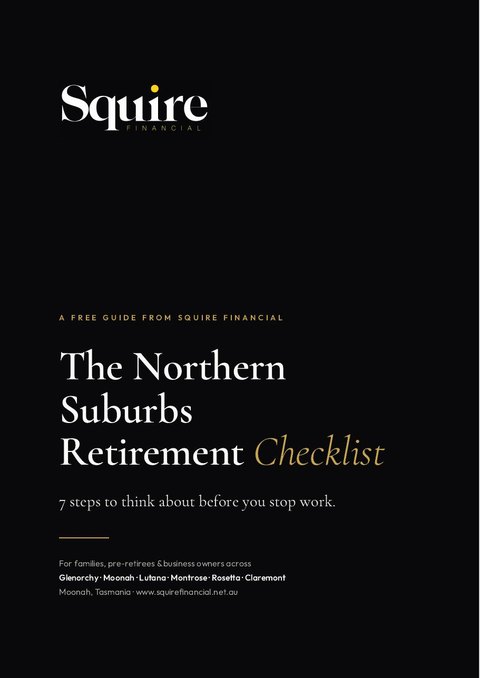
Not ready to chat? Start with the free checklist
The Northern Suburbs Retirement Checklist — seven simple things to think about before you stop work, whether that's three months or ten years away. Pop in your email and we'll send it straight over.
Your guide is on its way
Thanks! Your download should start automatically — if it doesn't, tap here to open it. Keep an eye on your inbox too.
General Advice Warning: This page is general information only and doesn't take into account your personal objectives, financial situation or needs. Superannuation and retirement rules — including contribution limits, preservation age and the Age Pension — change over time and depend on your circumstances. Before acting on anything here, consider seeking personal advice tailored to you.